

Knowledge HubIndoor Blinds
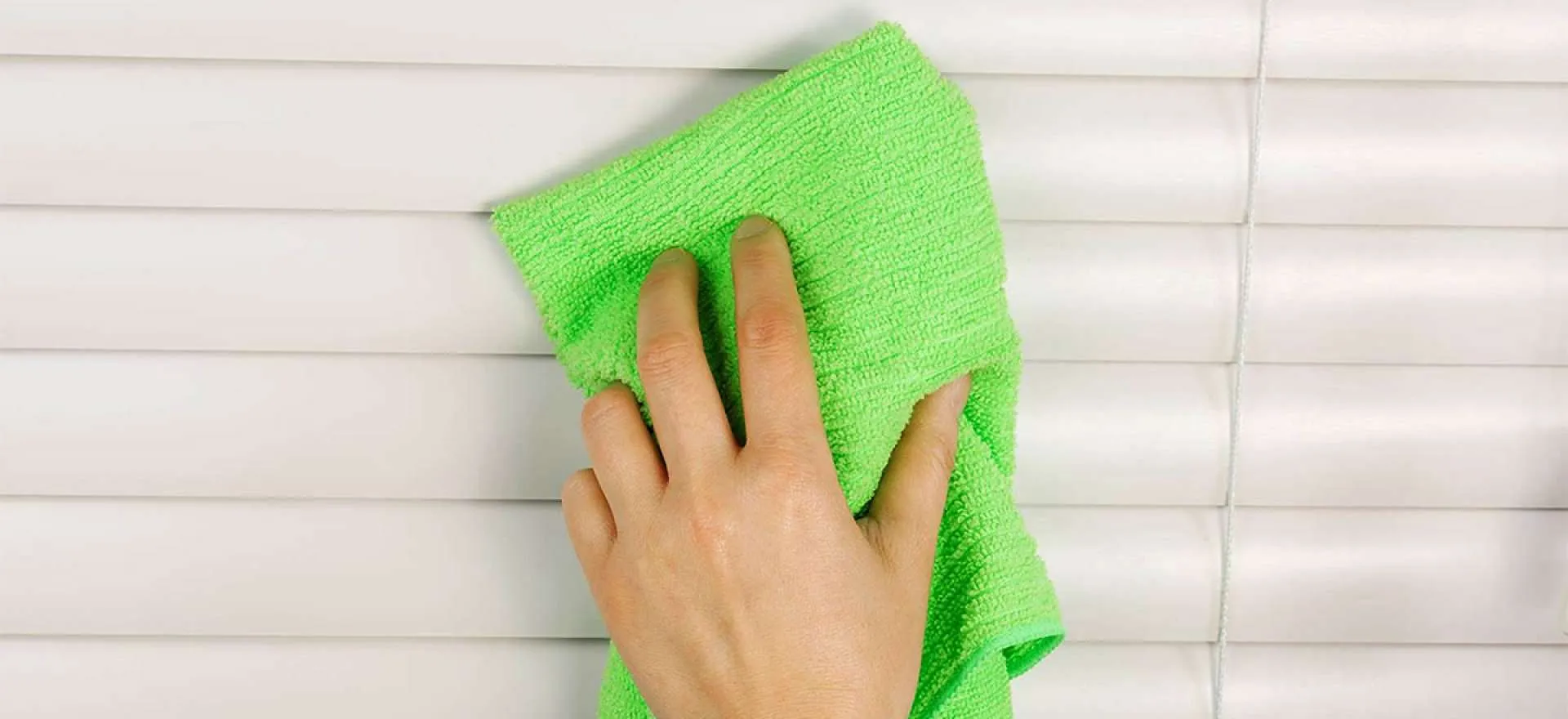
A dusty blind and a stained blind are different cleaning jobs. Begin by identifying the product, then check the care instructions for its fabric or finish. The cleaner that works on a painted window frame may damage the blind hanging in front of it.
If you no longer have the instructions, look for your order details or an accessible product label. A photo of the whole blind and the affected area will help us work out which guidance you need.
Before you start
- Read the care instructions for the actual material, including any backing or coating.
- Keep motors, electrical parts, headrails and operating mechanisms dry.
- Check that the blind moves normally and its brackets are secure. Cleaning will not repair a damaged mechanism.
- Choose a safe working position. Do not climb on furniture or remove a heavy blind just to reach a mark.
- Use only an approved cleaning method, testing a hidden area where the instructions recommend it.
Do not immerse a complete blind, hose an indoor blind or use a pressure washer. Keep household sprays away from the controls and fabric while cleaning nearby glass.
Match the care to the blind
| Blind type | What to identify first | What deserves particular care |
|---|---|---|
| Roller or panel glide | Fabric range, coating and backing | Rubbing or moisture may mark the surface |
| Roman | Fabric and any lining, rods or operating cords | The complete construction needs an approved method |
| Honeycomb or cellular | Fabric and cell construction | Keep the cells and internal components intact |
| Aluminium Venetian | Slat coating and operating mechanism | Avoid bending slats or wetting the headrail |
| Timber Venetian | Timber finish | Avoid saturation and unapproved polishes |
| Vertical | Blade material and connection details | Check instructions before removing blades or weights |
These are identification checks, not a substitute for the care sheet. Two blinds that look alike can have different materials.
Roller, Roman and other fabric blinds
For routine dust, follow the fabric’s approved brushing or vacuuming method. A soft brush or low-suction upholstery attachment may be suitable where the instructions allow it. Support delicate material without creasing or stretching it.
Do not assume “polyester”, “blockout” or “sunscreen” means washable. Those descriptions do not tell you everything about a finish or coating. Avoid repeated scrubbing at a stain, which can leave a larger or more visible patch than the original mark.
For honeycomb blinds, follow the cell-specific instructions rather than using the same technique as a flat roller blind. If dirt is inside the cells or the structure is damaged, ask for advice before trying to dismantle it.
Venetian and vertical blinds
With Venetians, the slats, cords and headrail need different consideration. Use the care method approved for the slat finish and avoid forcing slats out of shape. Timber should not be saturated; furniture polish is not automatically suitable for its coating.
For vertical blinds, identify the blade fabric before detaching anything. A broken hanger, damaged weight pocket or operating fault needs assessment alongside any cleaning. Keep track of the original arrangement if removal is expressly permitted.
Stains, dampness and damaged coatings
Tell the supplier or cleaner what caused the mark, if you know, and which products have already been used. That information can help avoid an unsuitable second treatment. Do not apply bleach, solvent, steam or a general mould treatment unless the exact product’s instructions permit it.
If the blind is repeatedly damp, consider the source of that moisture as well as the mark. Cleaning alone may not address the reason it returns. Visible damage to a backing, finish or cord is a reason to stop and arrange advice.
Frequently asked questions
Can I soak Venetian blinds in a bath?
Do not soak a complete blind. The material, cords and headrail may not tolerate immersion. Seek the product-specific method rather than relying on a general bath-cleaning tip.
Can I use a steam cleaner on roller blinds?
Only if the manufacturer expressly permits that treatment for the exact fabric and blind. Heat and moisture should not be assumed suitable for coatings or controls.
Should I lubricate a blind that has become stiff?
First identify the system and the cause. Do not apply a general-purpose spray to fabric, internal mechanisms or electrical parts. If it catches or will not travel normally, use our repair guidance.
Can I clean curtains the same way?
Curtains have their own fabric, lining and heading considerations. Use our separate curtain cleaning guide, especially before taking down a lined or coated curtain.
When is replacement worth discussing?
Ask for an assessment if the fabric is damaged, the coating is breaking down or parts are unavailable. A mark alone does not establish that the whole blind needs replacing. Contact us with photos so cleaning, repair and replacement can be considered separately.